Spring Jig Fishing for Bass
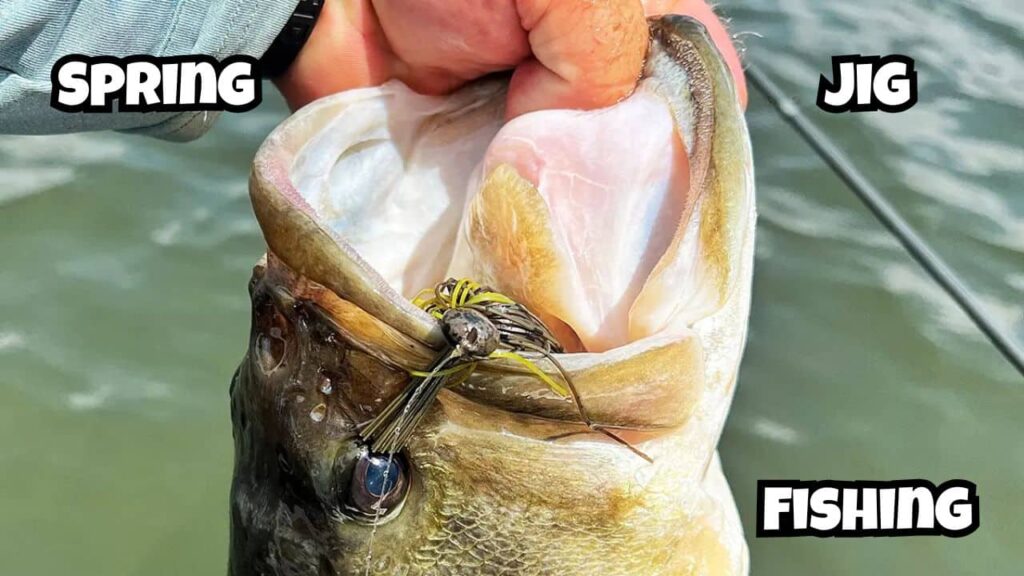
The jig is my absolute favorite lure in all of bass fishing. So as soon as fishing starts to heat up in the spring, the jig is the first lure I tie on and start using.
And although the jig is fantastic at catching bass all year round, there are a few different tweaks and adjustments to make to maximize your jig fishing success during the spring season.
I’ll try to keep things quick and simple, so here is the basic run down of spring jig fishing for bass.
Choosing the Right Jig Type
There are two styles of jigs that I focus on for spring jig fishing. Those are the flipping jig and a swim jig. I use a flipping jig throughout the entire spring season.
From the beginning of pre-spawn to the end of the post spawn. And I start using a swim jig about half way through the spring, once the shallow vegetation like lily pads, milfoil, and hydrilla start to grow a lot and become a core structure for shallow water bass.
- Flipping Jig: All throughout the spring for fishing shallow water hard cover
- Swim Jig: Second half of spring, once the grass and vegetation grows in
Spring Jig Trailers
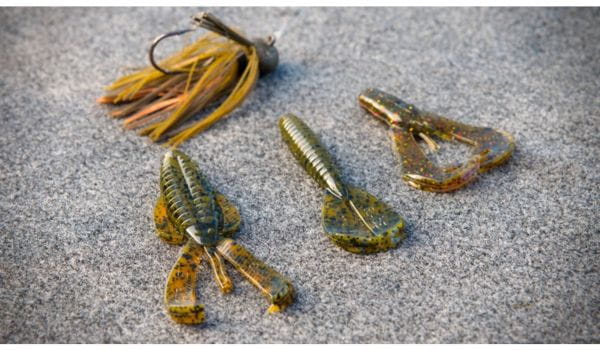
As the spring jig bite heats up, a swimming or flapping style of trailer will generally produce more bites than a chunk or beaver style trailer.
More Action
During the spring, as everything warms up, the underwater ecosystem gets very active and everything starts moving a lot more.
So you want to do the exact same thing with your jigs. And a trailer that actually swims and flaps its appendages does a great job of getting the warming bass fired up and gets crushed.
More Vibration
Another thing that happens during the spring time is rain, and lots of it. The spring rains will wash tons of mud and debris into the water and muddy things up a lot.
So having a bit extra vibration and water movement from your jig trailer helps bass find the jig easier in the water.
They can feel the swimming vibrations with their lateral line, hone in on the jig, and ultimately bite your jig more.
Spring Jig Colors
The biggest factor to your jig color is the clarity of the water. And because spring water is usually muddy from the spring rains, you want a jig color that is very visible in muddy water.
And black and blue is the best color option for those conditions.
Flipping Jig Colors

For my spring flipping jig fishing, I pretty much only use black and blue, with exception of some other primarily black colors (just to mix things up a bit).
Black jig colors are contrast very well in muddy water, and because a flipping jig only really imitates dark forage options like crawfish and bluegill, it is still quite natural even in water with better visibility.
Swim Jig Colors
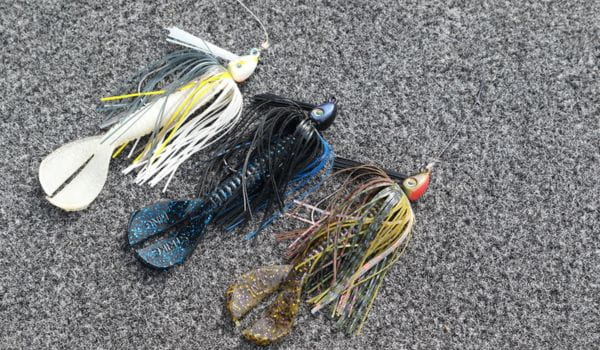
Spring swim jig colors are a bit more versatile because by the second half of the spring season, the water usually starts to clear up a lot, especially as the growing vegetation filters out a lot of debris in the water.
But I still keep my swim jig colors very simple, limiting it to just three color options.
- Green Pumpkin is your reliable “do-it-all” bluegill imitator.
- White is your go-to when bass are keyed in on flickering shad.
- Black/Blue provides the essential silhouette needed to trigger strikes in muddy water.
Where to Fish a Jig in the Spring
As with just about every other time of the year, shallow water cover should be your primary focus for spring jig fishing.
When fishing a flipping jig, focus on hard structures like wood, docks, brush piles, and any other types of hard cover.
When you start tying on a swim jig throughout the second half of spring, focus on soft structure, or vegetation.
This could be lily pads, snot grass, duck weed, other grassy vegetation, and even overhanging brush/branches.
Reeling this In
Spring is arguably the most exciting time to have a jig tied on. By matching your jig style to the emerging cover, swapping to a high-action trailer to mimic the waking ecosystem, and choosing high-visibility colors, you’re setting yourself up for a productive season on the water.
While the conditions might change with the rain and the rising temperatures, the reliability of a well-placed jig remains the same.
Keep it simple: flip the hard cover early, swim the grass late, and hold on tight—because a spring jig bite is often as aggressive as it gets.