Pre Spawn Swimbait Fishing 101
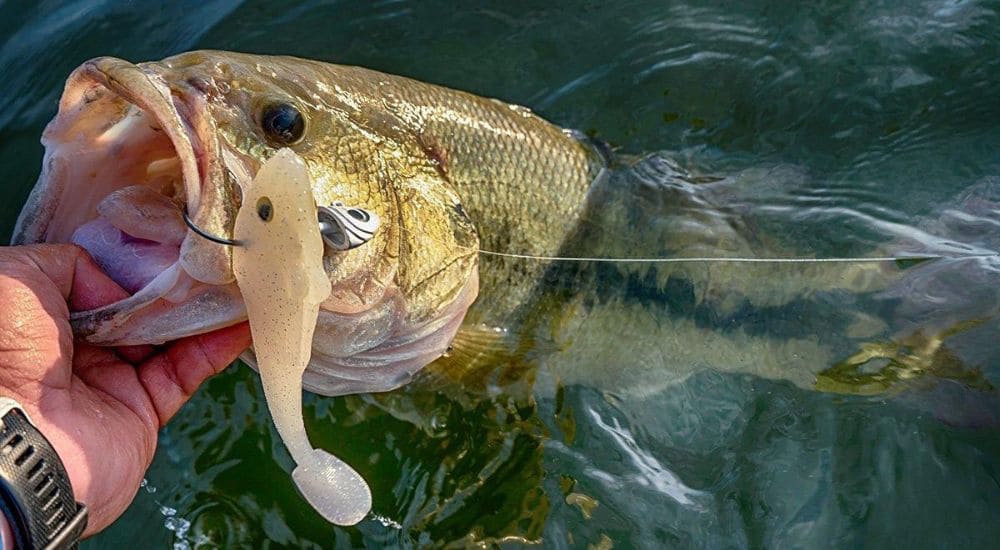
The pre spawn time of year is widely looked at as one of the best times to catch loads of bass, and the absolute best time of year to catch the biggest bass.
And one of, if not the best big bass bait you can use is a swimbait. Specifically, a full-sized or big, soft swimbait, when those hungry bass are warming up in the spring, they absolutely MUNCH a swimbait!
Let’s break down everything you need to know about pre spawn swimbait fishing.
Pre Spawn Basics
There are plenty of videos and articles breaking down every possible detail of the pre spawn period, but since this article is more about the swimbaits, I’ll keep this part short and just highlight the important points.
- Bass are Warming Up: As the water temperatures increase, the bass warm up and their metabolism speeds up as well.
- Bass are Feeding Up: Bass know they will have to spawn in the coming months, so they begin feeding up a lot in preparation.
- Bass are Moving Shallow: Both to feed up and to find good spawning areas, bass will begin their move into shallow water during the Pre Spawn.
- Baitfish are Readily Available: As the water temps increase and the days get longer, the baitfish will also move up shallow and are the favorite forage of bass this time of year.
Why a Swimbait
There are really an abundance of reasons why a swimbait catches bass so well, but specifically during the pre spawn period, these are the big factors that I have found.
- Swimbaits are Shallow Water Baits: It is hard to fish a swimbait out deep, so with bass moving up shallow, it is a perfect time to present them with a swimbait.
- Covers Lots of Water: Although bass are all heading up into shallower water, each bass will move up at slightly different times, so they can be very spread out and on the move. Being able to cover lots of water helps you be very efficient and put your bait in front of as many bass as possible.
- Natural Profile: Many different baits can catch bass this time of year, but it never hurts to use a bit that looks exactly like the real thing. And since bass are primarily targeting baitfish this time of year, a swimbait is the most realistic imitation of exactly what the bass are eating.
- Big Bait for BIG BASS: With a soft swimbait, you are able to use big baits that aren’t too heavy or hard to fish. And whenever you up size your bait, you also upsize the average size of the bass that you catch. So during the pre spawn, when bass are at their biggest they will be all year, a soft swimbait can catch you an absolute GIANT!
How to Fish a Swimbait in the Pre Spawn
So for the most part, you’re going to fish these swimbaits just like you would a spinnerbait or a chatterbait.
Pretty much just cast them out and retrieve it back in. If you are fishing really shallow, 1-3 ft of water, it doesn’t really matter how high you keep your bait in the water column, because as long as it is under water, it will be right in front of the bass.
Now if you are fishing a bit deeper, maybe 4-8 ft of depth, I suggest keeping the swimbait in the lower half, down closer to the bottom.
It doesn’t have to be actually touching or bouncing off the bottom, but just try to keep it down in the lower column.
The reason is that in the slightly deeper depth zones, bass will usually migrate along the bottom rather than suspending.
So putting your swimbait closer to the bass will always get you more bites. Especially because the spring rains will often muddy up the water a bit, keeping your swimbaits close to the bass helps a lot.
Other than that, there isn’t much to think about when it comes to the retrieve. That is another reason that a swimbait is such a great lure, it is incredibly easy to fish and pretty much anyone will get bit using it.
Wear to Fish the Swimbait
So like I discussed, the swimbait isn’t really a deep water lure, so I wouldn’t fish it in more than 8 feet of water. Now when it comes to location, you want to fish your swimbaits through transition areas.
1. Changes in Bottom Composition (Structure Transitions)
These are arguably the most common and important type of transition. Bass use the line where the bottom changes as an ambush or travel route.
- Rock to Sand/Gravel: A shoreline or point that goes from large chunk rock to smaller pea gravel or sand. Bass often hold on the rocks for cover and move to the flatter, smoother bottom to spawn or feed.
- Gravel/Clay to Mud: In a creek arm or flat, the point where the bottom switches from a harder substrate (gravel, clay) to a soft, silty mud bottom.
- Hard Bottom Edge: The line where a shell bed or rock reef meets a flat, open, soft bottom.
2. Changes in Cover (Vegetation and Wood Transitions)
When different types of cover meet, it creates a unique edge that bass gravitate towards.
- Grass Type Changes: Where one type of aquatic plant, like thick coontail, abruptly meets a patch of different grass, like thinner cabbage or lily pads.
- Wood to Rock/Sand: The edge of a brush pile or laydown log that sits right on a flat sandy or rocky bank.
- Weed Line to Open Water: The deep, defined edge of a grass bed (like hydrilla or milfoil) that drops off into open, deeper water.
3. Changes in Depth/Contour (Subtle Edges)
These are usually found on points, humps, or shorelines where the bottom profile is not uniform.
- Steeper Bank to Flatter Bank: An area where a very steep, cliff-like bluff end transitions to a more gradual, sloping gravel bank.
- Channel Swings: The spot on a creek or river channel where it abruptly swings close to a point or shoreline. This transition from deep-water access to a shallow point makes an excellent staging area.
- Subtle Contour Changes: Even a slight change on a large flat, like a small hump or a submerged ditch/fence row, where the depth changes by just a few feet.
Bass will use all of these transition areas as staging points. They will hold to or cruise around these transitions, feeding up right before they push into the shallow, spawning flats. And if you keep fishing a swimbait around these areas, you will get CRUSHED in no time!
Why a Soft Swimbait
Part of this is just personal preference, but I also do believe that soft swimbaits catch more bass than hard swimbaits or glide baits.
First of all, they are certainly much easier to use, because they are really just cast and retrieve baits.
Secondly, you can use full-sized or even big soft swimbaits that are not very heavy at all, so you don’t need an special swimbait rods or swimbait reels.
Anyone can easily and cheaply start using soft swimbaits to catch giant bass.
Best Soft Swimbaits:
1. Z-Man ShadTron
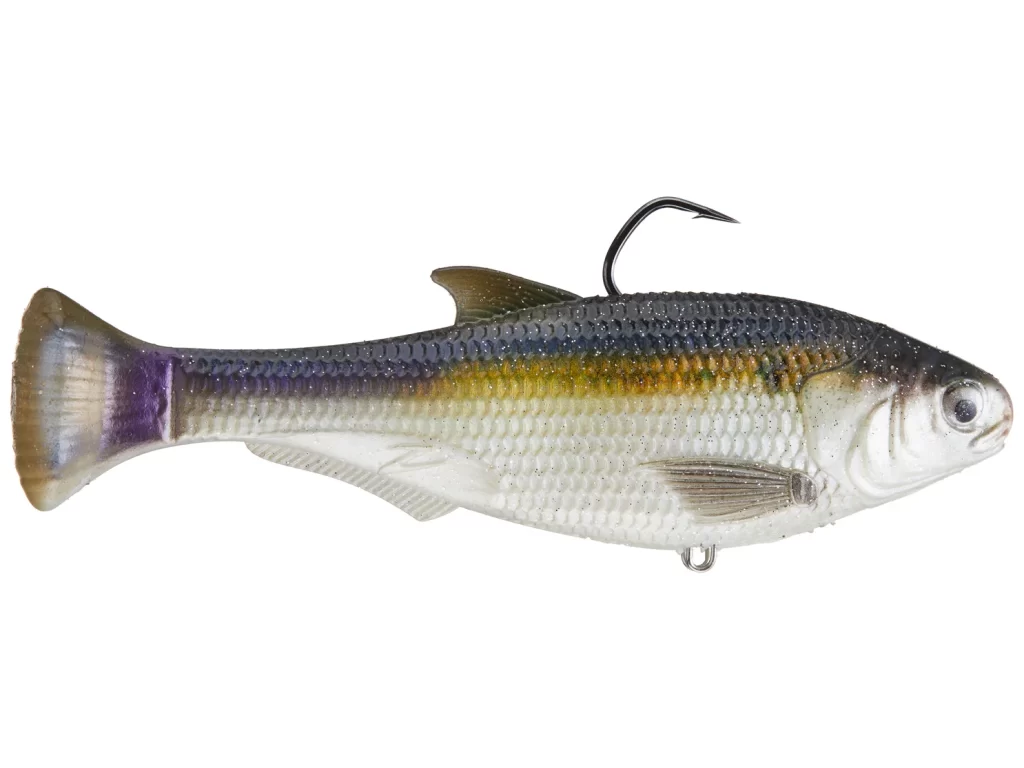
This durable, tear-resistant swimbait features an ultra-realistic shad profile and a wedge-shaped tail for a natural, slow-speed swimming action.
The innovative over/under line-through harness allows for flexible top or belly rigging. Its buoyant, balanced design maintains an upright posture.
The ShadTron is also our top rated and top recommended Line Through Swimbait, which gives it a number of additional advantages over other soft swimbait styles.
2. Z-Man Swag LT
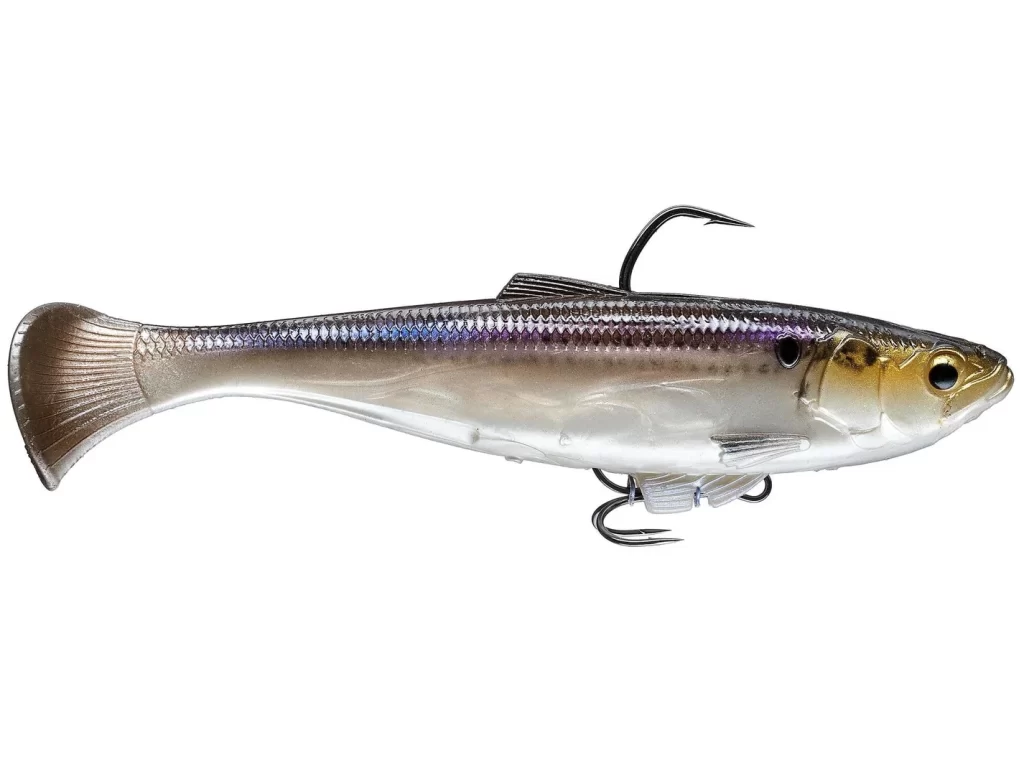
The Z-Man Swag delivers a hard-thumping action from its wedge-shaped tail that remains stable at all retrieve speeds, attracting bass and pike.
Constructed from 10X Tough ElaZtech for maximum durability, it features an innovative Over/Under Line-Through harness that includes both a top hook and a custom double-pronged belly hook for reliable hooksets.
Available in 5-inch (3/4 oz) and 6-inch (1 1/4 oz) sizes.
3. Berkley CullShad
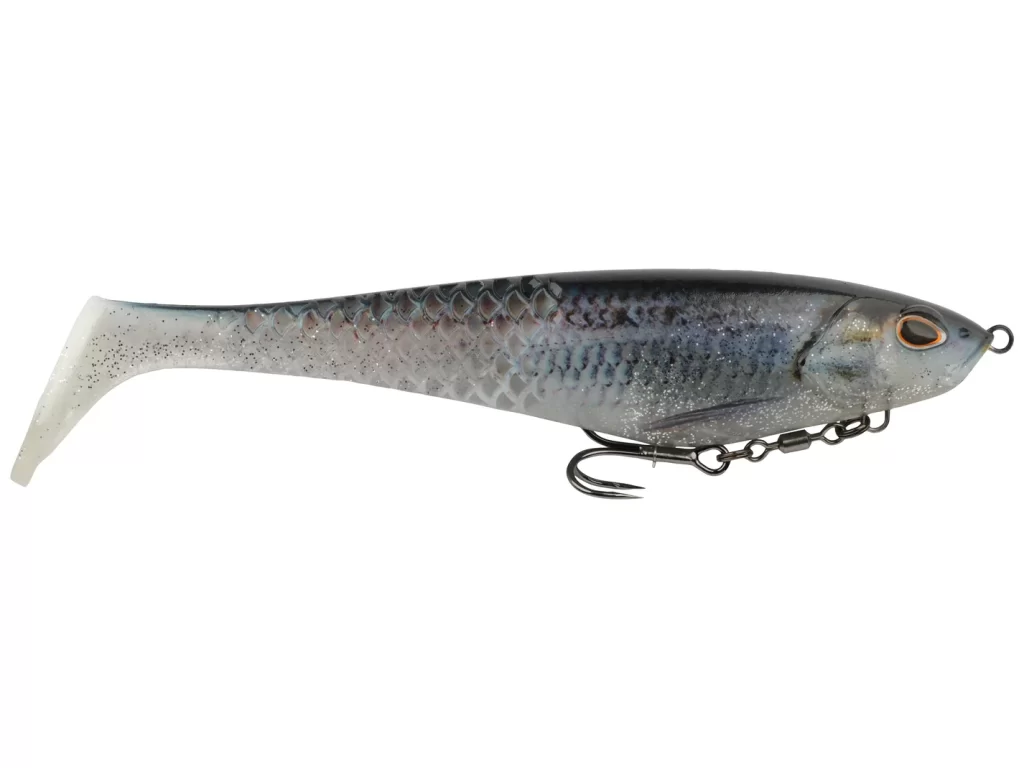
The Berkley CullShad combines a large profile with proprietary PowerBait Honey Comb Technology for next-level action and enhanced durability.
Featuring smart weighting options for an adjustable sink rate and precise depth control using nail weights, this swimbait runs true at various retrieve speeds.
It comes pre-rigged with a reliable harness and a sticky-sharp Fusion19 treble hook, plus the added attraction of the original PowerBait scent.
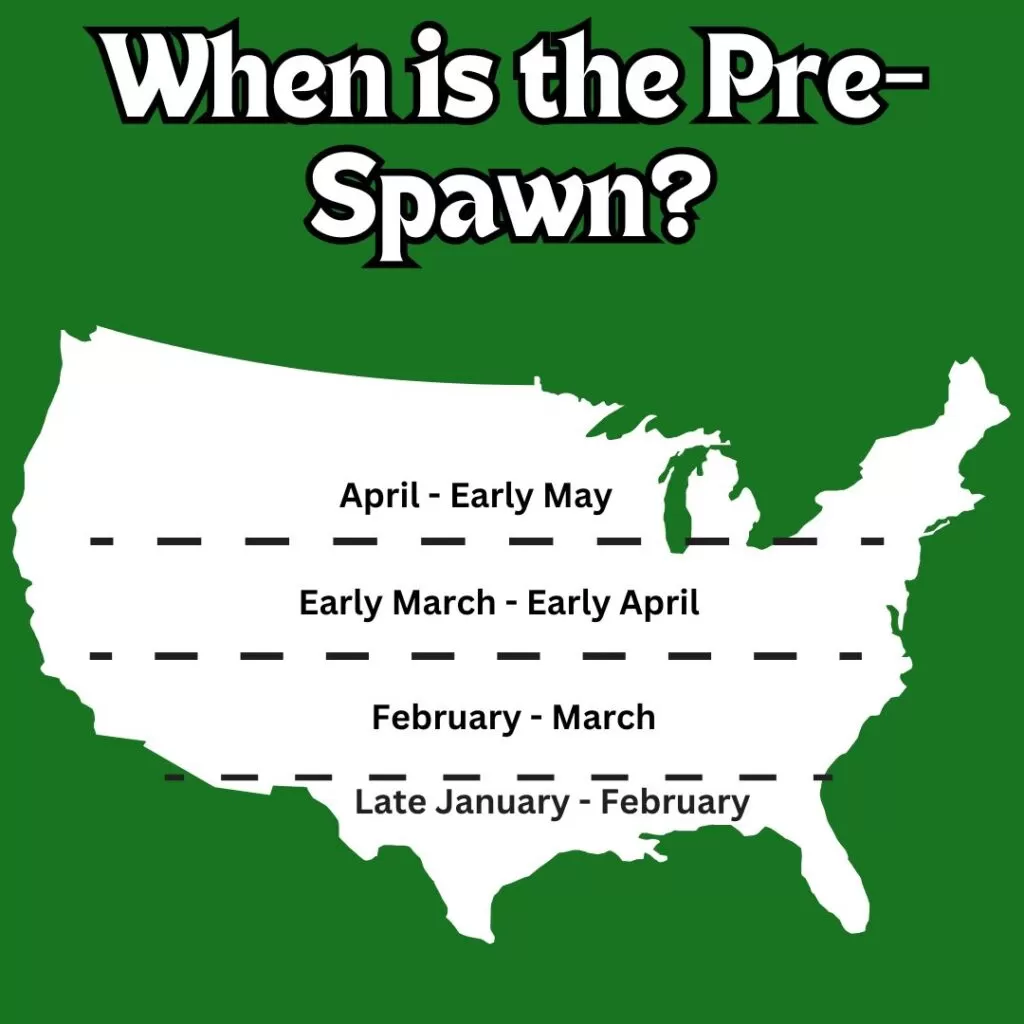
When is the Pre-Spawn?
Also Read: Best Pre Spawn Baits for Ponds
Reeling this In
The pre-spawn is the undisputed best time to target the largest bass of the year, and the soft swimbait is your ideal weapon.
As bass move shallow to feed up, the swimbait offers a natural, large-profile meal that perfectly matches their primary forage.
Its ability to cover water efficiently and its simple cast-and-retrieve action make it incredibly effective.
Focus on working your swimbait through transition areas (changes in cover, bottom, or depth) where bass stage before the spawn.
For peak performance this spring, tie on a soft swimbait and get ready to catch your biggest bass of the season!
Also Read: Winter Swimbait Fishing 101