3 Best Spinnerbait Colors
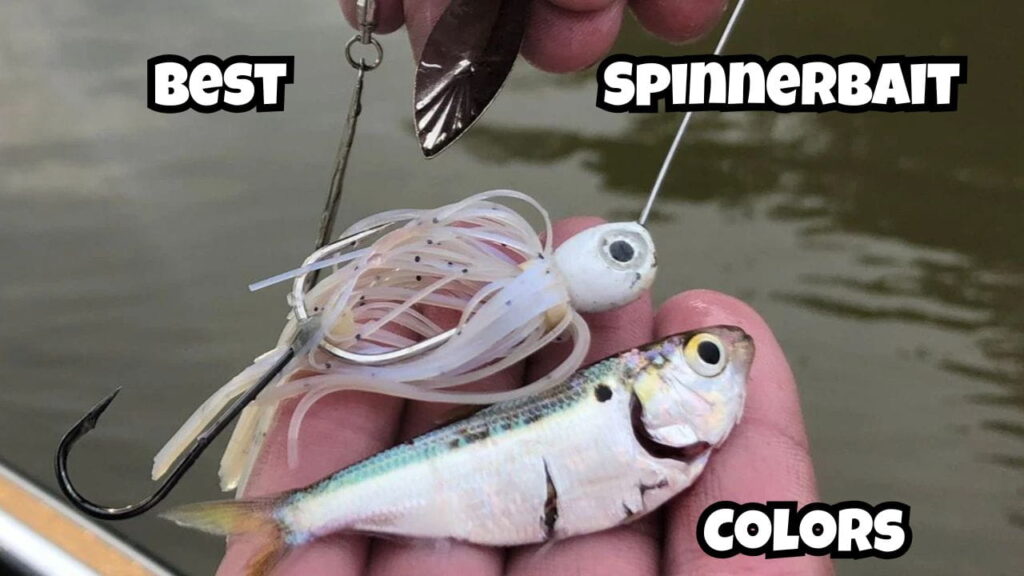
The spinnerbait is one of the most classic, time tested lures in all of bass fishing. It has been catching bass for over half a century.
And with so many years of testing and experimenting, anglers have a very good idea what the best color choices are for spinnerbaits and when to use each one.
And even after decades and decades of use, spinnerbait colors are just as simple as they were in the beginning. Here are the 3 best spinnerbait colors for bass fishing.
1. White
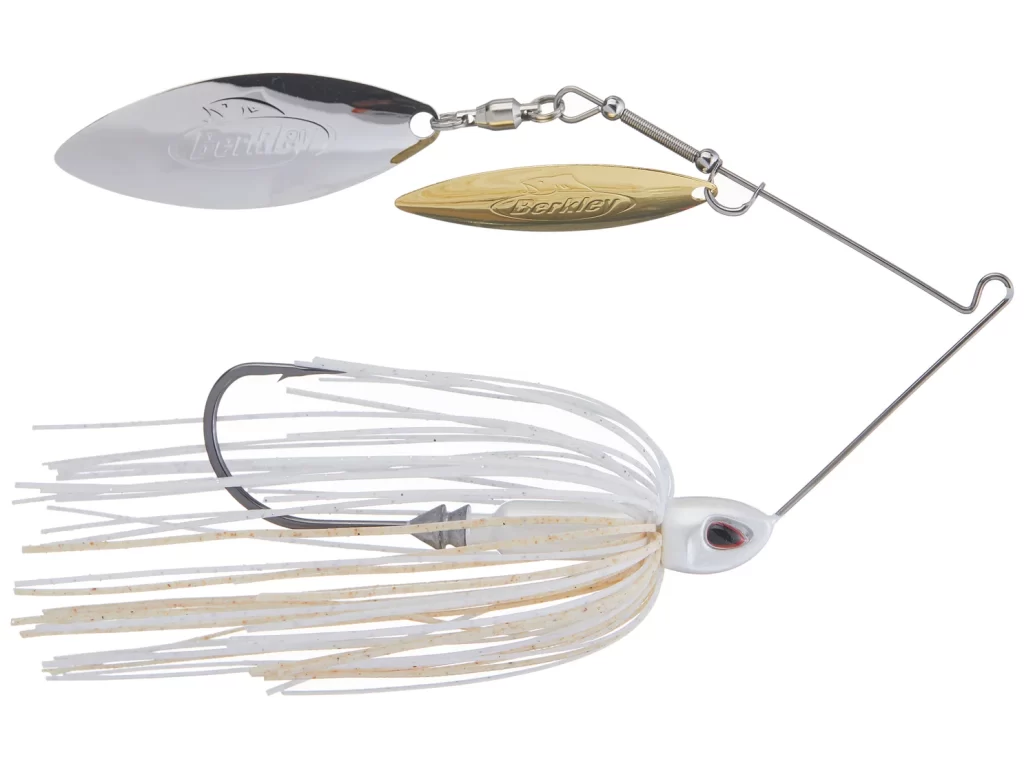
White is far and away the most popular and and widely considered the best color spinnerbait for bass. The main reason for this is that white is a color that imitates schooling baitfish such as shad, herring, and shiner.
And the spinnerbait is also a lure that is designed to look like a small school of baitfish as well. So when you are fishing a spinnerbait, you are generally trying to imitate shad, herring, or shiner, so you may as well use a color that also imitates those forage.
Additionally, white is a very universal lure color because it looks very natural in all water conditions.
From muddy water to clear water or from sunny days to cloudy days. White reflects a lot of light, just like the shiny baitfish you are trying to imitate.
So no matter what when or where you are fishing, white is the absolute staple color for spinnerbait fishing.
Best Blade Color for White:
- Silver: Most of the time, silver blades will pair the best with a white spinnerbait because shad and herring baitfish are a silver color.
- Gold: If you are down south and have golden shiner or very tannic colored water, a gold blade can be the best blade color.
2. Green / Bluegill
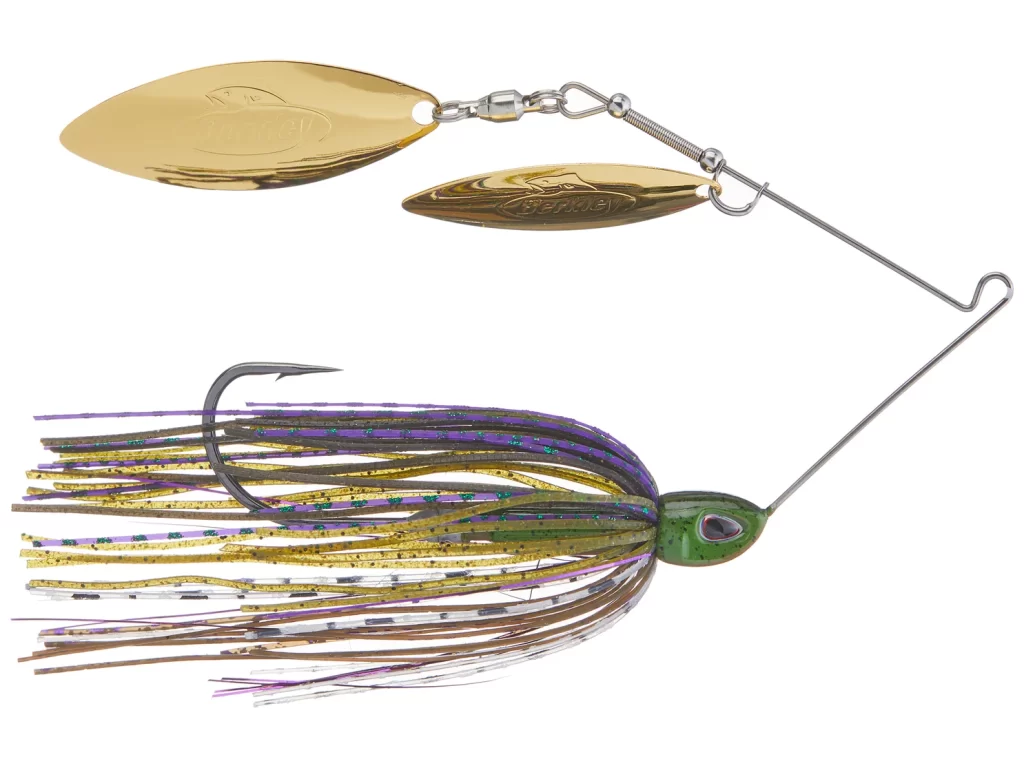
A green or bluegill colored spinnerbait is going to be the second most popular option. This is often the favorite spinnerbait color for pond and bank fisherman because many small ponds and lakes don’t have and shad, shiner, or herring in them.
So bluegill and other bream species are really the only baitfish that the bass are feeding on. And a greenish spinnerbait does a great job of imitating 1-3 small bluegill.
Bluegill don’t tend to school up as much or as tightly as the other baitfish I mentioned, so many guys prefer to use other lures such as a bladed jig if they are trying to imitate bluegill.
But there are also plenty of fisherman that swear by a spinnerbait no matter what baitfish they are imitating.
So if you are a pond fisherman or your lake only has bluegill species as the main forage, a green spinnerbait can be a fantastic option.
Best Blade Color for Green:
- Gold: Bluegill and other bream species generally have much more gold reflections because they have darker, green, yellow, or orange body colors. So gold blades are a more realistic bluegill and bream imitation.
3. Black
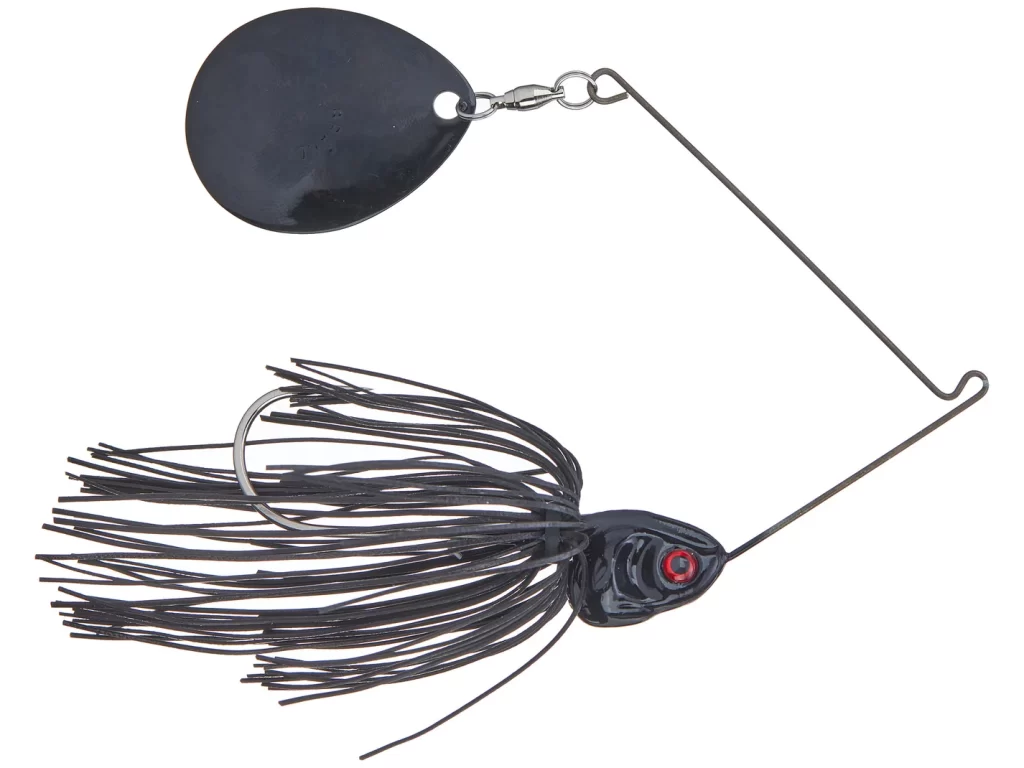
There are really two situations where black spinnerbaits are very effective. The first one is very muddy water.
When the water gets extremely muddy, the high contrast of a jet black lure makes it easier for the bass to see.
The second situation is night time fishing. A black spinnerbait is the most famous night time bass lure of all time.
The jet black body gives a more visible contrast in the dark and the thumping blade gives off enough vibration to make it easy for the bass to hone in on.
Both situations where black spinnerbaits shine are very dark, low visibility water conditions where the higher contrast of the dark black helps bass find and eat the bait.
Black isn’t quite as popular as the other two colors, largely because most anglers don’t fish during the night at all, so the black color loses a lot of its utility for those anglers.
But black is still one of the staple, proven spinnerbait colors that have been catching bass for decades.
Best Blade Color for Black:
- Black: You fish a black spinnerbait when there is little to no light in the water. So the blades aren’t even able to reflect any light. The dark black blade color gives the best contrast and visibility under the circumstances when you will be fishing a black spinnerbait.
Reeling This In
The beauty of the spinnerbait lies in its simplicity. While modern tackle shops are filled with endless patterns and neon shades, these three colors—white, green, and black—have remained the gold standard for a reason: they work.
By matching your color choice to the primary forage in your water and adjusting for visibility, you take the guesswork out of your gear and focus on what actually matters—putting the lure in front of the fish.
Whether you’re casting into a crystal-clear reservoir or a midnight farm pond, keeping these staples in your tackle box ensures you’re prepared for any conditions the water throws at you.