The 3 Best Finesse Jigs for Bass
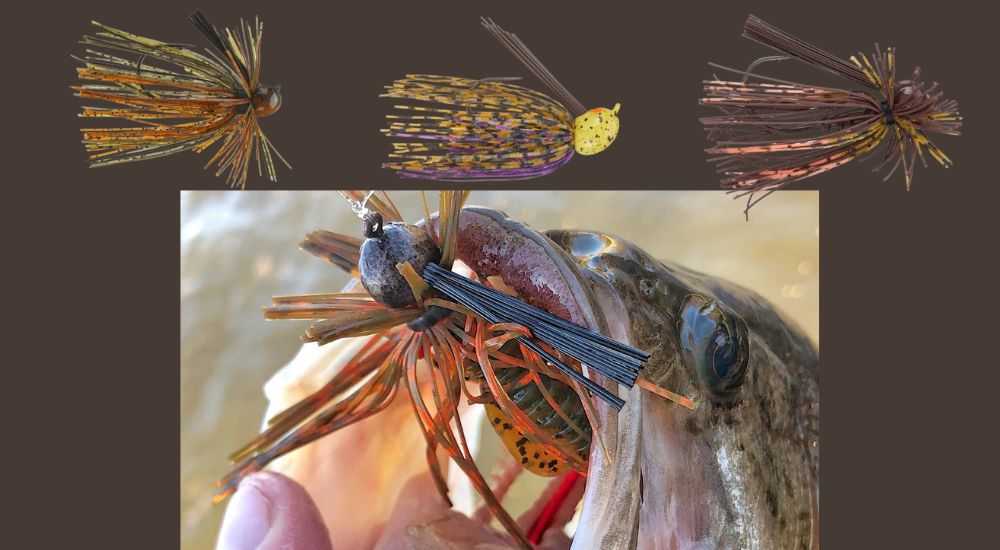
Sometimes it takes a bit smaller, more finesse profile to get the bass to bite. And with the bass jig being the most popular lure category in all of bass fishing, the bass see different jigs over and over again.
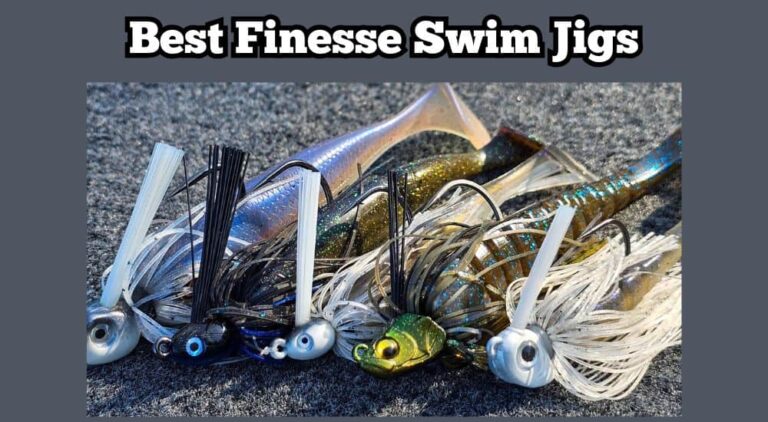
So downsizing your jig profile to something a bit more natural and subtle can get pressured bass to still bite. Here are the 3 best finesse jigs for bass fishing!
Finesse Jig Criteria:
- Smaller Hook
- Lighter Weed Guard
- Thinner, Smaller Skirt
1. Dirty Jigs Luke Clausen Finesse Jig
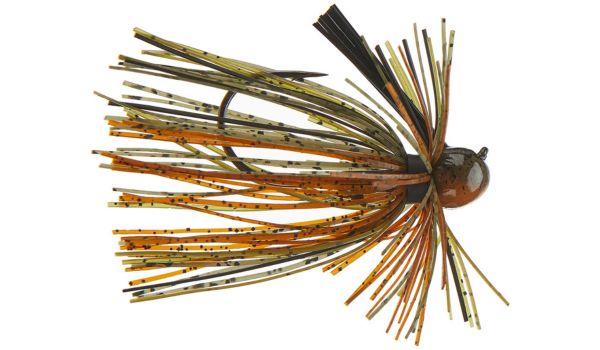
The Dirty Jigs Luke Clausen Finesse Jig emerges as a standout compared to other finesse jigs for its exclusive Gamakatsu Low Profile Big Bite 60° hook.
The line tie is recessed, preventing the head from interfering with the bite and ensuring the hook remains secure for solid hook sets.
The centered hook shank allows for proper balance and gives plenty of bite. The Luke Clausen Finesse Jig head is coated with Dirty Jig’s custom 3-tone airbrush paint and a robust, clear coat of epoxy for an attractive, long-lasting finish.
This Dirty Jigs Tackle finesse jig comes through cover easily – it’s very versatile for fishing in or around vegetation, docks, and other forms of cover.
A high-definition thin cut skirt delivers a compact profile that boosts the interest of even the pickiest of eaters.
The finesse jig standard has just been raised with this Dirty Jigs Luke Clausen offering, making it the go-to option for a smaller profile jig.
- Designed with bass pro tour angler Luke Clausen
- Features an exclusive Gamakatsu Low Profile Big Bite 60° hook for reliable hook sets
- The line tie is partially recessed, which keeps the head out of the way and prevents the hook from camming out with fewer hang-ups
- The HD Thin cut skirt gives a detailed compact profile pique the interest amongst the pickiest eaters
Recommended Size: 5/16 oz
2. 6th Sense Divine Ball Head Finesse Jig
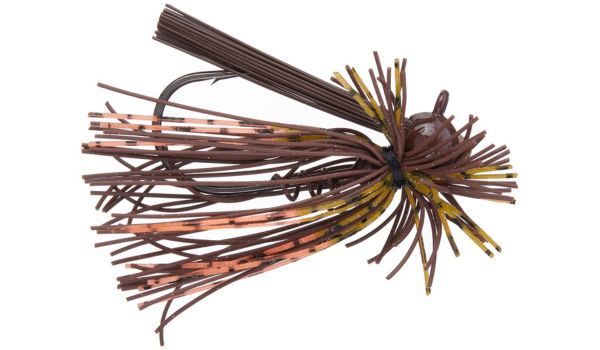
The 6th Sense Divine Ball Head Finesse Jig combines precision and durability, making it ideal for targeting bass in rocky bottoms, clear water, or dense cover.
Its compact, balanced ball head offers exceptional control, while the hand-tied round and flat silicone skirt creates lifelike movement to entice strikes.
Equipped with a sharp hook and a weed guard, it prevents snags without sacrificing solid hooksets.
Tournament pros contributed to the design of its realistic colors, which match local forage and provide an advantage in any conditions.
The ScrewLock keeper securely locks your plastic trailers in place. Fewer trailer replacements lead to significant cost savings compared to traditional keepers.
This finesse jig is available in various sizes and performs exceptionally well when navigating submerged ledges, crawling through rocks, or targeting structures.
- Compact, balanced ball head design for precision control
- Hand-tied round and flat silicone skirt
- Weed guard minimizes snags while maintaining a strong hookset
- Premium black nickel 4/0 hook ensures solid hook-ups
- ScrewLock keeper securely locks your plastic trailers
- Available in multiple sizes and forage-matching colors
- Ideal for clear water, rocky bottoms, and structure fishing
Recommended Size: 5/16 oz
3. Z-Man CrossEyeZ Power Finesse Jig
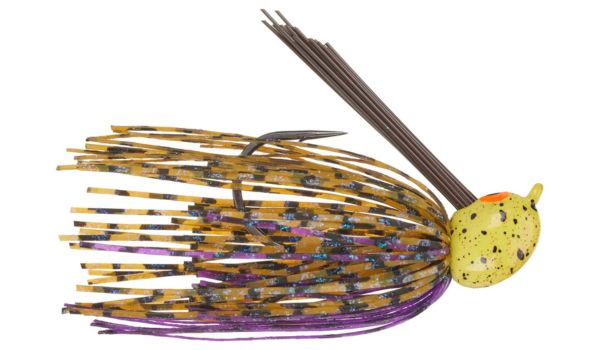
Sometimes you just need a jig that is built to do it all. Z-Man agrees with that, which is why they designed the Z-Man CrossEyeZ Power Finesse Jig!
This compact jig is perfect for a range of different techniques, from casting to swimming. The hand-tied skirt is matched perfectly by the painted head to create the best presentation possible.
The action of the skirt works for a range of techniques, allowing you to switch it up without having to change your lures. Experience a jig designed to do it all with the Z-Man CrossEyeZ Power Finesse Jig!
- Compact, streamlined design is ideal for casting, pitching, skipping, and swimming
- Hand-tied 100 percent silicone skirts and wire trailer keeper
- Durable, color matched head paint schemes
- Hallmark ‘cross eyes’ for added attraction
- Hook Size: 2/0
Recommended Size: 1/4 oz
Best Finesse Jig Colors
Black and Blue: This is a legendary combination for a reason. It’s highly effective in stained or muddy water because the dark silhouette provides excellent visibility for bass in low-light conditions. It’s a fantastic imitator of bluegill and crawfish, which are staples in a bass’s diet.
Green Pumpkin or Brown: When the water is clear, green pumpkin and brown are the most natural and versatile choices. They mimics the colors of a variety of forage, including crawfish, bluegill, and other small prey like goby or sculpin. Variations of this, like green pumpkin with purple or red flake, offer subtle differences that can be key on a tough bite.
When to Fish a Finesse Jig
A finesse jig is a downsized version of a traditional jig, and it’s most effective when bass are reluctant to bite a larger, bulkier bait.
While a traditional jig is a versatile lure, a finesse jig shines in specific situations. Here’s a breakdown of when to choose a finesse jig over a traditional one:
1. Water Clarity and Fishing Pressure
- Clear water: In clear water, fish can be spooky and easily see a lure’s details. The smaller, more subtle profile of a finesse jig is less intrusive and more likely to get a strike from wary fish.
- High fishing pressure: When a body of water is heavily fished, bass become conditioned to larger, more common lures. A finesse jig offers a different look that can trigger bites from pressured fish that have seen it all.
2. Weather and Seasonal Conditions
- Post-cold front: After a cold front, fish often become lethargic and less aggressive. A slow, subtle presentation with a finesse jig is more likely to tempt a sluggish bass than a fast-moving, bulky bait.
- Cloudless, calm days: Finesse jigs are ideal for sunny, still days with little to no wind, as these are conditions where fish are more hyper-aware and a subtle approach is key.
- Winter and early spring: In cold water, bass are less willing to chase a fast-sinking or large lure. The slower fall and smaller profile of a finesse jig can be a great way to mimic a slow-moving crawfish or other forage, making it an attractive, easy meal.
3. Forage and Imitation
- Mimicking smaller prey: Use a finesse jig when you need to imitate smaller forage like a bluegill or a small crawfish. This is particularly effective when you see fish spitting up smaller bait.
- Natural colors: To enhance the natural presentation, stick to natural colors like green pumpkin and brown, and pair the jig with a compact, natural-looking trailer.
4. When to Stick with a Traditional Jig
Traditional jigs still have their place. They are your go-to lure in these situations:
- Heavy cover: The heavier wire hook and thicker weed guard on a traditional jig are built to handle dense cover like heavy vegetation, wood, and docks.
- Dirty or stained water: In low-visibility conditions, the larger profile and more vibrant colors of a traditional jig are easier for fish to see and track.
- Covering water: If you need to cover a lot of water quickly and aggressively, a traditional jig is often a better choice.
Also Read: The 3 Best Finesse Jig Trailers
Reeling this In
With bass fishing becoming more popular than ever, bass are seeing the same lures over and over again.
When they start to ignore traditional jigs, it’s time to switch to a more subtle, compact presentation. Finesse jigs are the perfect solution for targeting pressured bass in clear water, on calm days, or in post-front conditions.
By understanding when to use a finesse jig and selecting the right one for the job, you can increase your chances of getting a bite when other anglers are coming up empty.